
In the pursuit of fulfilling their commitments under the Paris Agreement, governments worldwide are taking proactive measures by implementing mandatory carbon reporting programs and carbon pricing schemes. This shift is accompanied by a notable increase in the number of direct carbon pricing jurisdictions, currently exceeding 68 in 46 countries, as well as the rapid expansion of carbon tax regimes and emissions trading systems. Notably, the recent introduction of the EU's Carbon Border Adjustment Mechanism has further intensified the need for organizations to remain well-in formed and adapt accordingly.
Amidst these evolving dynamics, Scope 3 emissions have emerged as a critical focal point, considering their substantial contribution of over 70 per cent to the total emissions inventory. By encompassing Scope 3 emissions within their reporting framework, companies can gain a holistic understanding of their carbon footprint and its associated environmental impact. Armed with this invaluable insight, organizations are empowered to establish ambitious emissions reduction targets, develop robust sustainability strategies, and make informed decisions pertaining to supply chain management and product development.
This workshop will provide participants with a comprehensive understanding of Scope 3 emissions, including their categories, boundary setting, and associated uncertainties. Participants will acquire the knowledge and competencies required to measure and report indirect GHG emissions
throughout the entire value chain and gain insights into their organization's environmental impact, enabling informed goal-setting, decision-making, and enhanced transparency and accountability in sustainability reporting.
Prerequisite:
No prerequisite is required to attend this workshop; however, it is essential to follow through with the GHG Accounting & Reporting Principles workshop
Learning Time:
16 hours (4 hours x 4 days)
CICPD Credits:
8
Level:
Industry-Applied: Major
Micro-credentials:
CICPD-UTHM Certificate of Completion: End-of-Workshop
CICPD-UTHM Practitioner/ Industry Specialist/Certified Expert: Upon Meeting Credit Hours
• Understand the definition and the difference between Scope 1, Scope 2, and Scope 3.
• Understand the importance of Scope 3 emissions reporting in the organisation.
• Understand the 15 categories in Scope 3 emissions.
• Understand the various type of boundary setting.
• Understand how to determine and quantify emissions in Scope 3.
• Understand target boundaries and the pros and cons of different target boundaries.
• Identify the uncertainties in reporting.

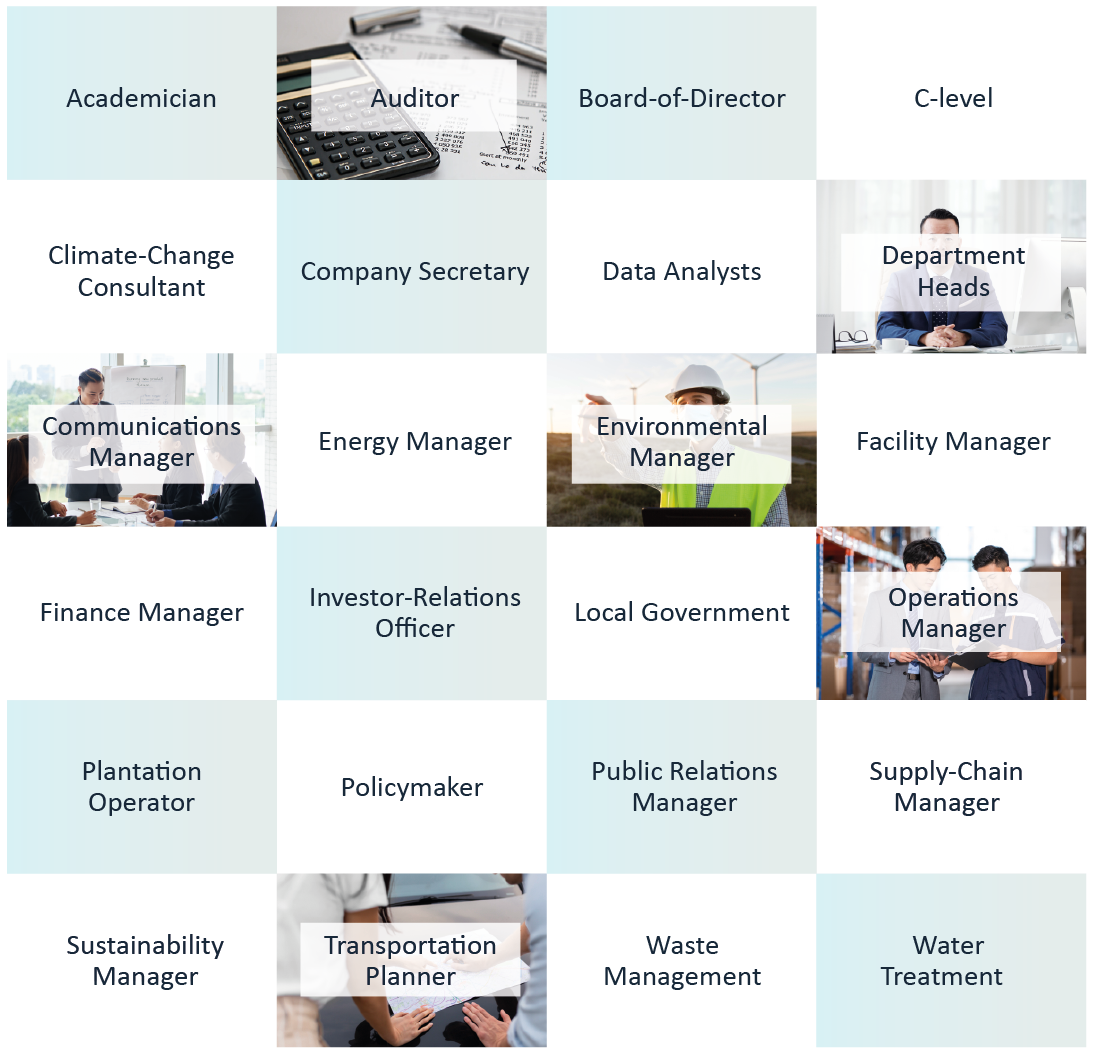
WHO SHOULD ATTEND


Centre for Industry Certifications and Professional Development (CICPD)